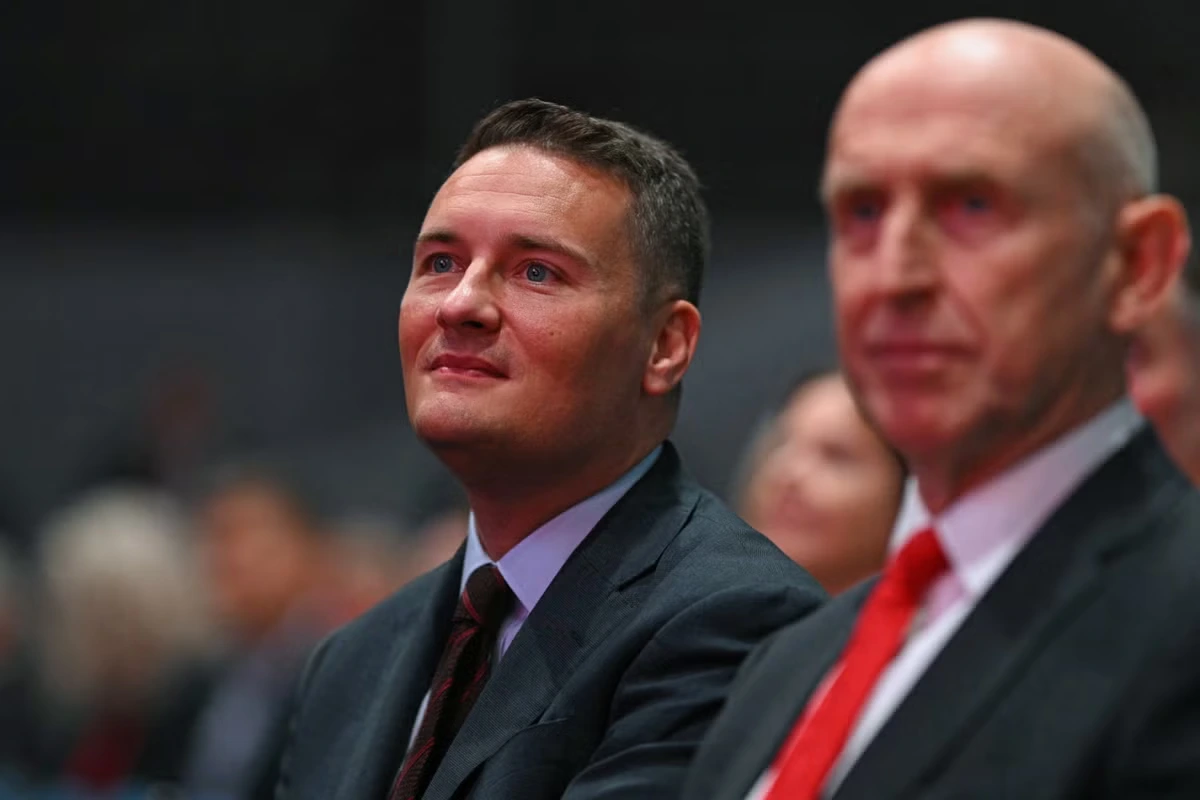
Wes Streeting made his first speech as Britain’s new defence secretary on Wednesday, joking about how his department’s budget played a role in recent turmoil. John Healey, who is now chancellor, resigned as defence secretary on 11 June in protest at Keir Starmer’s refusal to spend more on the military. “I certainly feel like we’ve got a firm friend in His Majesty’s Treasury,” Streeting quipped.
As one of the most loyal figures in the Starmer government, Healey’s decision made the prime minister’s position untenable. But now, Healey is “poacher turned gamekeeper”, having to put the public finances first. How firm a friend of Streeting (another key figure in the downfall of Starmer) and of the armed forces will he prove to be?
In his new role, next to nothing. But when he quit Starmer’s cabinet he didn’t hold back. In his resignation letter to Starmer he said: “You have been unable, and the Treasury has been unwilling, to commit the resources that the nation needs to defend the country at this time of rising threats.
“We have worked to secure a Defence Investment Plan that does two things. First, deal with the increasing operational demands on defence now and step up the [Strategic Defence Review] actions to meet the increasing threat. Second, set a clear path to meet the new Nato commitment you agreed – to spend 3.5 per cent of GDP in 2035. I am certain that a headmark date for 3 per cent of GDP on defence in 2030 is what Britain must set.”
It depends on Andy Burnham’s priorities; he has already highlighted issues such as rough sleeping, social care and council housing that are potentially extremely costly to fix, leaving less for the forces. On the other hand, the UK is obliged to honour its Nato commitments (and thus appease Donald Trump) and to face a more aggressive Russia.
Burnham clearly has huge authority at the moment, but so does Healey, whose resignation from the government a second time on the issue of defence spending would provoke a crisis. Defence spending is also a driver for Burnham’s ambition to “reindustralise” Britain. Both men are also conscious of the remarkable capacity of the MoD to waste huge amounts of their procurement budgets.
The short answer is that Healey and Burnham will probably return to where Rachel Reeves and Starmer left things; they will revisit social security reform as a way to balance defence demands – but also run into similar resistance from Labour backbenchers to benefits cuts. “Welfare to warfare” was not why they ousted Starmer in favour of Burnham.